
How Production Supervisors Drive Manufacturing Growth

Updated: Aug 26
A manufacturing plant does not grow because machines run faster for a few hours. It grows when people, equipment, materials, quality, and delivery all work together with less friction. The production supervisor sits at the centre of that system.
This role is often described as operational. That is true, but incomplete. A strong production supervisor turns daily production into business performance. They protect output, prevent waste, build team capability, and make sure problems reach the right people before they become costly.
Growth in manufacturing is not only about new customers or new equipment. It is also about getting more value from the capacity already in the building.
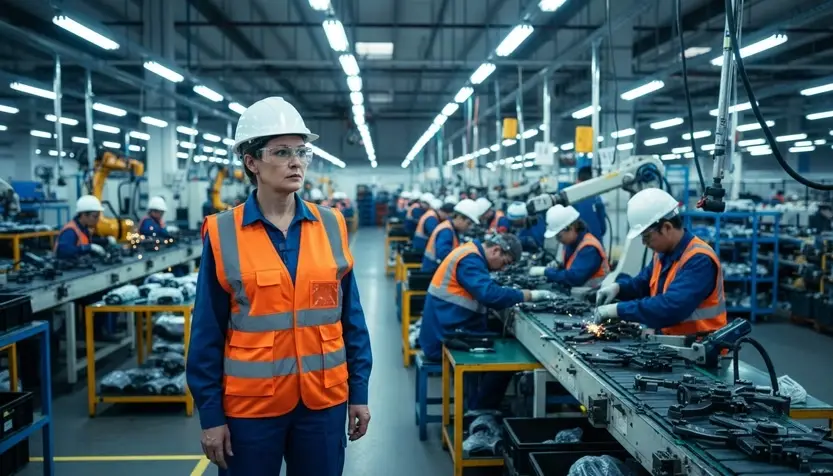
The production supervisor connects business goals to shop floor work.
Senior leaders may set targets for output, labour efficiency, on-time delivery, scrap, safety, and cost. Operators focus on the task in front of them. The production supervisor connects those two worlds.
That connection matters. A target such as “increase throughput” means little unless someone translates it into daily action:
Which line needs attention first?
Which job should run next?
Which operator needs support?
Which machine is causing repeated stoppages?
Which quality issue is slowing release?
The supervisor makes these decisions in real time. Each choice affects revenue, cost, and customer trust.
A planned production schedule can look clear at the start of a shift. Then a material shortage appears, a tool wears out, or an operator calls in sick. The supervisor must adjust without losing control of the day. Good decisions protect flow. Poor decisions create overtime, missed shipments, rework, and frustration.
This is where production supervisors drive manufacturing growth in a practical way. They turn business strategy into a shift-by-shift operating rhythm.
They improve output by removing small sources of delay.
Manufacturing losses are not always dramatic. Growth often hides inside small delays that happen every day.
A line stops for eight minutes while waiting for a forklift. A machine changeover takes longer because a fixture is missing. An operator leaves a station to search for labels. A quality check waits because the right gauge is not nearby. Alone, each issue looks minor. Across a week or month, they can consume significant capacity.
The production supervisor is close enough to see these patterns. They can ask direct questions:
Why did this stop happen?
Has it happened before?
Who needs to know?
Can the team prevent it tomorrow?
This does not require blame. It requires attention. The best supervisors treat delays as clues. They look for weak points in the process, then work with maintenance, planning, quality, and materials teams to fix them.
Some improvements are simple. Move tools closer to the point of use. Clarify the handoff between shifts. Confirm material availability before the job starts. Adjust staffing when a process step regularly becomes a bottleneck.
These changes may not look impressive on their own, but they build capacity. More good parts leave the line with the same people, space, and equipment. That is real business growth.

They protect quality before defects become business problems.
Quality problems do more than create scrap. They tie up labour, delay shipments, consume materials, damage customer confidence, and create stress across the plant. A production supervisor plays a major role in stopping small quality issues before they become large business problems.
The supervisor sees whether standards are being followed during actual production. They can confirm that checks happen at the right time, tools match the job, and operators understand the requirement. They can also spot when a process is drifting.
For example, if a dimension keeps moving toward the edge of tolerance, the supervisor can act before parts fail inspection. If a new employee looks unsure about a step, the supervisor can arrange coaching before mistakes repeat. If a machine produces mixed results after a changeover, the supervisor can pause and involve the right technical support.
This protects both cost and reputation.
A strong supervisor also builds a culture where operators report problems early. That culture matters because people often see warning signs before the numbers show a clear trend. When the team trusts the supervisor, they are more likely to speak up.
Quality growth comes from consistency. The supervisor helps make consistency visible, repeatable, and expected.
They build people who can carry the operation forward.
Manufacturing growth depends on skills. Equipment matters, but skilled people decide how well that equipment performs.
Production supervisors have daily influence over training, cross-training, coaching, and accountability. They see who is ready for more responsibility. They know who needs help with a process. They notice which employees solve problems calmly and which employees need clearer direction.
A supervisor who invests in people creates a stronger operation.
That includes:
Teaching standard work in a clear way
Pairing newer employees with experienced operators
Rotating skills where the process allows it
Giving feedback close to the moment of work
Recognizing safe, accurate, reliable performance
Cross-training is especially valuable. When only one person can run a process, the plant becomes fragile. Vacation, illness, turnover, or sudden demand can disrupt output. When more employees can perform key tasks, scheduling becomes easier, and customer commitments become safer.
People development also supports retention. Employees are more likely to stay when they receive fair direction, useful coaching, and a clear path to improve. A respectful supervisor can reduce churn, protect knowledge, and lower the hidden costs of constantly rebuilding the team.
A supervisor’s daily behaviour teaches the team what the business truly values.
If the supervisor accepts shortcuts, shortcuts become normal. If the supervisor reinforces safety, quality, and follow-through, those behaviours become part of the culture.
They turn shop floor data into better decisions.
Modern manufacturing creates a steady flow of information. Counts, downtime records, scrap reports, labour hours, safety checks, maintenance notes, and schedule changes all tell part of the story.
The production supervisor makes that information useful.
Data alone does not improve a plant. Someone must compare it with what actually happened on the floor. A report may show downtime, but the supervisor can explain whether the cause was a material issue, a tooling problem, a training gap, or a scheduling conflict.
That context helps leaders make better decisions. It also helps other departments support production more effectively.
For example:
Shop floor signal | What the supervisor can clarify | Business impact |
Repeated short stops | Whether the cause is machine, material, or method | Higher output and less wasted labour |
Rising scrap on one part | Whether the issue started after a changeover or material change | Lower cost and stronger quality control |
Missed schedule on one line | Whether staffing, planning, or maintenance caused the delay | Better delivery performance |
Overtime on a stable demand pattern | Whether the standard time or staffing model is wrong | More accurate cost planning |
The supervisor does not need to be a data analyst. They need to be accurate, observant, and disciplined. Good notes, honest reporting, and clear escalation can prevent leaders from solving the wrong problem.
When supervisors bring facts from the floor, the business can act with confidence.
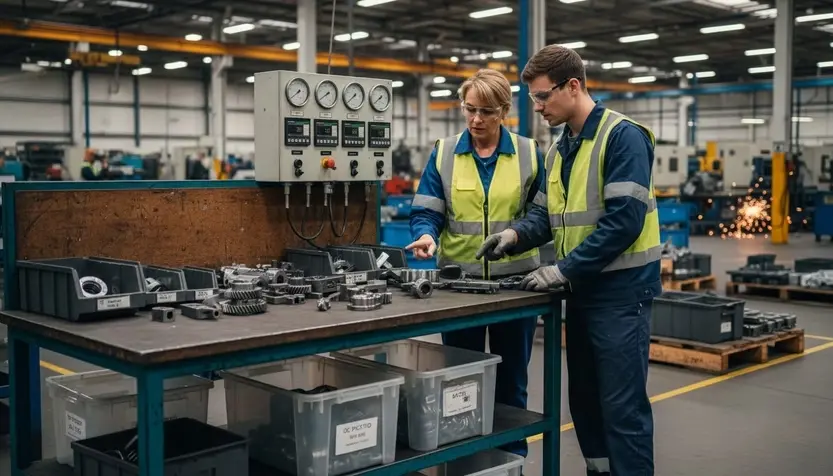
They create stability during change.
Growth usually brings change. New products, higher volumes, new equipment, process changes, customer audits, and staffing shifts all affect the production floor. Without strong supervision, change can create confusion.
The production supervisor helps stabilize the transition.
They explain what is changing, check whether people understand the new process, and watch for early problems. They also give managers honest feedback about what is working and what is not. This reduces the gap between the plan and the reality of production.
A new process may look sound on paper, but operators may find that material presentation is awkward, the work sequence creates extra motion, or the inspection step is unclear. The supervisor captures those issues quickly and helps correct them before they slow the launch.
This role becomes even more valuable when demand increases. A plant cannot scale chaos. It must scale discipline.
Growth needs structure:
Clear shift expectations
Reliable communication
Stable quality checks
Practical training
Fast response to problems
Respect for safety and standards
The production supervisor keeps these basics alive when pressure rises.
The strongest supervisors think beyond the shift.
A production supervisor must run the shift, but the best ones also think about tomorrow. They ask what will make the next shift cleaner, safer, and more productive.
That mindset changes the role from task manager to growth driver.
Instead of only reacting to breakdowns, they help prevent them. Instead of only filling gaps, they build capability. Instead of only reporting misses, they explain causes. Instead of only pushing output, they protect quality and safety while helping the business meet demand.
This balance is not easy. Supervisors deal with real constraints, including labour shortages, equipment limits, sudden schedule changes, and pressure from several directions. Still, their position gives them rare influence. They see the work, the people, the problems, and the results in one place.
Manufacturers that treat production supervision as a strategic role gain a clear advantage. They get better execution, faster problem-solving, stronger teams, and more reliable performance.
Business growth in manufacturing is often discussed in boardrooms, but it is earned on the shop floor. The production supervisor is one of the people who makes that growth possible, one shift at a time.

