
Revolutionizing Pharmaceutical Manufacturing with AI Applications
Updated: Sep 4
Pharmaceutical manufacturing faces constant pressure to improve efficiency, reduce costs, and ensure the highest quality standards. Artificial intelligence (AI) offers powerful tools to meet these challenges by transforming how drugs are developed, produced, and monitored. This post explores how AI applications are reshaping pharmaceutical manufacturing, providing practical examples and insights into their impact.

Enhancing Drug Discovery and Development in Pharmaceutical Manufacturing
AI accelerates drug discovery by analyzing vast datasets to identify promising compounds faster than traditional methods. Machine learning models predict molecular behaviour, helping researchers focus on candidates with the highest potential. This reduces time and cost in early development stages.
For example, companies use AI to screen millions of chemical structures and predict their interaction with biological targets. This approach has shortened the discovery phase from years to months in some cases. AI also assists in designing clinical trials by identifying suitable patient groups and predicting outcomes, improving trial success rates.
Improving Manufacturing Processes
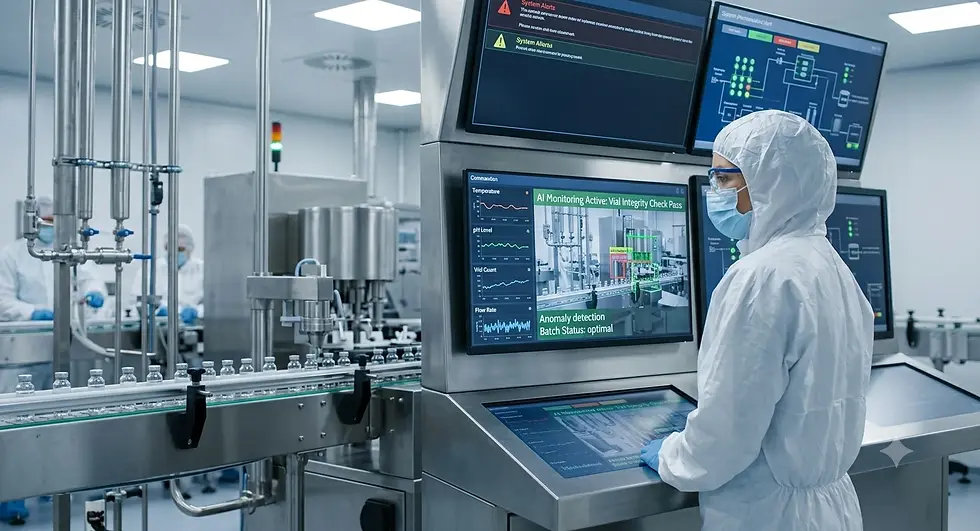
Pharmaceutical manufacturing involves complex processes that require precision and consistency. AI supports process optimization by monitoring equipment and production parameters in real time. Sensors collect data on temperature, pressure, and chemical composition, which AI algorithms analyze to detect anomalies or inefficiencies.
Predictive maintenance is one key application. AI models forecast when machines might fail, allowing timely repairs that prevent costly downtime. Additionally, AI helps adjust production variables dynamically to maintain product quality, reducing waste and ensuring compliance with regulatory standards.
Quality Control and Assurance
Maintaining strict quality control is critical in pharmaceutical manufacturing. AI enhances inspection and testing by automating visual checks and analyzing test results with greater accuracy. Computer vision systems identify defects in tablets or packaging that human inspectors might miss.
Natural language processing (NLP) tools review documentation and batch records to flag inconsistencies or errors. This reduces human error and speeds up quality assurance processes. AI-driven analytics also identify patterns in quality data, helping manufacturers address root causes of defects and improve overall product reliability.

Supply Chain and Inventory Management
AI improves supply chain efficiency by forecasting demand and optimizing inventory levels. Machine learning models analyze historical sales data, market trends, and external factors like seasonal changes or regulatory updates. This helps manufacturers avoid shortages or overstock situations.
Automated systems track raw materials and finished products throughout the supply chain, providing real-time visibility. AI can suggest alternative suppliers or routes to prevent disruptions. These capabilities reduce costs and ensure timely delivery of medicines to healthcare providers.
Case Study: AI in Vaccine Production
A notable example of AI in pharmaceutical manufacturing is its role in vaccine production. During the COVID-19 pandemic, AI helped optimize production schedules and quality checks for vaccines. Machine learning models predicted yield variations and adjusted processes to maximize output without compromising safety.
AI also supported rapid analysis of clinical trial data, accelerating regulatory approvals. This experience demonstrated how AI can handle high-pressure manufacturing environments and complex biological products effectively.
Challenges and Considerations
Despite its benefits, integrating AI into pharmaceutical manufacturing presents challenges. Data quality and availability are crucial for effective AI models. Manufacturers must invest in robust data collection and management systems.
Regulatory compliance is another concern. AI applications must meet strict guidelines to ensure patient safety and product integrity. Transparency in AI decision-making processes helps build trust with regulators and stakeholders.
Workforce adaptation is essential as well. Employees need training to work alongside AI tools and interpret their outputs. Combining human expertise with AI capabilities creates the best outcomes.
Looking Ahead
AI will continue to expand its role in pharmaceutical manufacturing. Emerging technologies like reinforcement learning and generative models promise further improvements in process design and drug formulation. Collaboration between AI developers, manufacturers, and regulators will shape the future landscape.
Manufacturers that adopt AI thoughtfully can expect faster development cycles, higher product quality, and more resilient supply chains. These advantages ultimately benefit patients by delivering safer, more effective medicines.


