
How AI and Automation are Changing the CPG Industry
- Steve Brennan

- Feb 13, 2024
- 3 min read
Updated: Apr 3
Staying competitive in modern manufacturing requires more than adding new equipment. It requires better visibility, faster decisions, and smarter systems that help operations teams improve quality, throughput, and planning.
That is why AI and automation are playing an increasingly important role across Food & Beverage Manufacturing, Packaging, CPG and Life Sciences. These technologies are not replacing the need for strong leadership or skilled employees. Instead, they are changing how companies manage production, optimize supply chains, forecast demand, and respond to market changes.
The Power of AI in Data Analytics
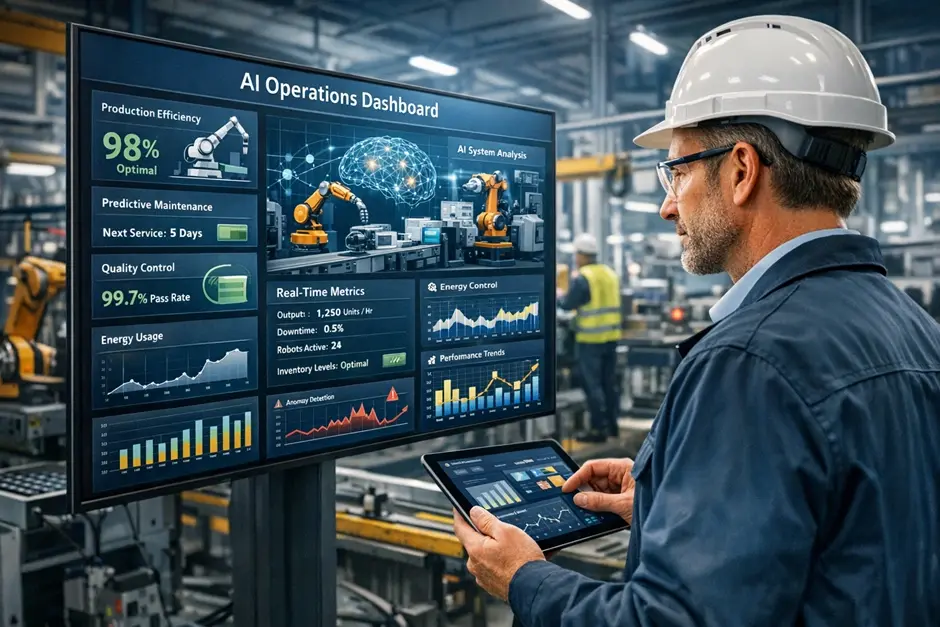
AI gives manufacturers the ability to process large amounts of operational data quickly and turn it into practical insight.
In industrial environments, AI can support:
Production planning
Quality trend analysis
Maintenance prioritization
Labor visibility
Inventory decisions
Demand forecasting
For manufacturers, this means moving from reactive problem-solving to more predictive and strategic decision-making.
Data-Centric Approach in CPG
One of the key areas where AI is making a significant impact is demand forecasting. Traditional forecasting methods often fall short of predicting consumer behaviour accurately. AI, on the other hand, leverages historical data, external factors, and even social media trends to generate more accurate predictions.
This helps CPG companies optimize inventory management, reduce stockouts, and minimize excess inventory, ultimately improving customer satisfaction and cost savings.
AI in Demand Forecasting: Precision in Predictions
One area where AI can create meaningful value is demand forecasting.
In CPG Manufacturing, stronger forecasting can help companies better plan raw materials, reduce spoilage risk, and support more stable production schedules. In Packaging, it can help align output with customer demand while reducing excess inventory. In Life Sciences, better forecasting can support improved material planning and operational responsiveness.
More accurate forecasting can help manufacturers:
Reduce stockouts
Limit excess inventory
Improve production scheduling
Strengthen service levels
Lower unnecessary carrying costs
Automation: Transforming Manufacturing in CPG
Automation, especially when combined with better data, continues to reshape plant operations.
Examples include:
Robotic material handling
Automated packaging systems
Machine vision inspection
Sensor-based monitoring
Digital production tracking
In Packaging Manufacturing, automation can improve line speed and consistency while reducing errors in labelling, sealing, and product handling. In Food Manufacturing, it can support safer, more repeatable production. In Life Sciences, automation helps reinforce precision, consistency, and process control.

AI and Automation in Supply Chain Management
Moreover, AI-powered chatbots and virtual assistants are reshaping the way CPG companies interact with their customers. These intelligent systems provide personalized recommendations, answer customer queries, and even assist in the online purchasing process. By leveraging AI to enhance customer experience, CPG brands can build stronger relationships with consumers, leading to increased brand loyalty & repeat business.

Enhancing Customer Interaction with AI
AI is also changing how manufacturers and commercial teams interact with customers and internal stakeholders.
For example, AI-enabled tools can help support:
Faster customer communication
Order-status visibility
Sales forecasting
Product recommendation analysis
Demand planning between the commercial and operations teams
This matters in B2B packaging, ingredient supply, and technical product environments, where responsiveness and planning accuracy affect customer retention and operational efficiency.
Conclusion
The role of AI and automation in the CPG industry is transformative. These technologies are not just tools for improving efficiency; they are catalysts for innovation & growth.
As CPG companies continue to embrace AI and automation, they position themselves to thrive in a dynamic and competitive market, ensuring that they can meet the ever-changing demands of consumers and stay ahead of industry trends.
The journey toward a more intelligent and automated CPG industry has only just begun, and the possibilities for innovation and improvement are limitless.


